
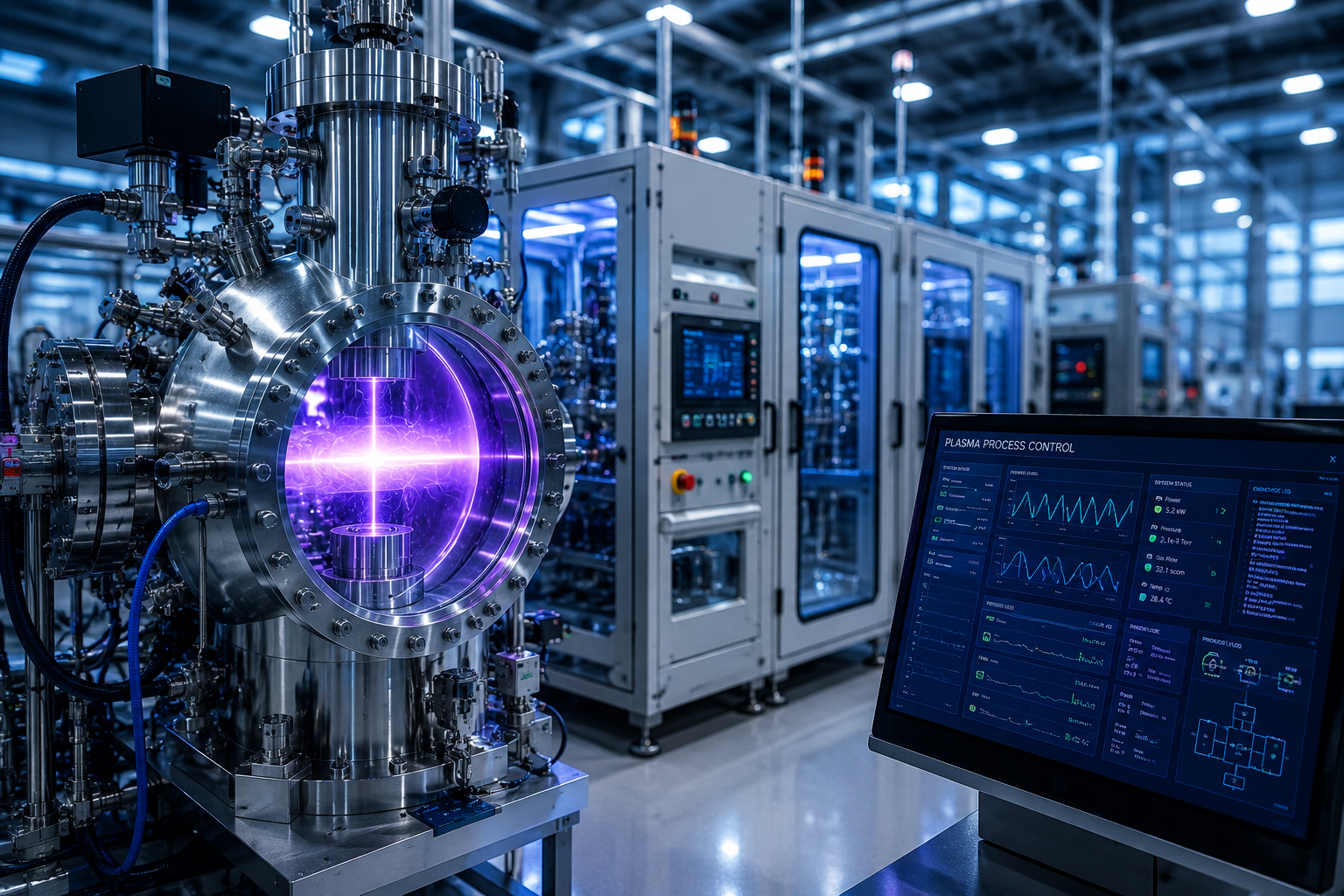
Industrial Plasma Technologies and the Future of Scalable Deep-Tech Systems
Industrial Plasma Technologies increasingly represent an important category within scalable deep-tech innovation because translating laboratory science into real-world systems requires far more than technical discovery alone. The pathway from research insight to industrial implementation depends on repeatability, process engineering, infrastructure design, and long-term system integration.
Deep-tech development differs fundamentally from conventional software innovation. Scientific technologies frequently require years of multidisciplinary validation before practical deployment becomes possible.
Luminari Synergy Pvt. Ltd. investigates plasma-enabled technologies through a research-driven framework connecting engineering science, fluid activation systems, industrial scalability, and sustainable innovation.
What Are Scalable Deep-Tech Systems?
Scalable deep-tech systems are technology platforms built on scientific and engineering discoveries capable of progressing beyond laboratory research toward broader real-world implementation.
Unlike conventional digital innovation, deep-tech systems originate from:
- physics
- chemistry
- materials science
- biological engineering
- industrial systems research
These technologies often require extensive experimentation before commercialization becomes feasible.
Distinction Between Software and Deep-Tech Innovation
Software systems can often scale through digital replication.
Deep-tech systems frequently involve:
- physical infrastructure
- manufacturing constraints
- experimental validation
- process optimization
- regulatory pathways
This introduces substantially greater engineering complexity.
Commercialization Perspective
Research commercialization generally progresses through:
- scientific discovery
- prototype development
- pilot validation
- system optimization
- industrial implementation
Research organizations increasingly integrate science with systems engineering.
Mini Summary:
Scalable deep-tech systems require research maturity, engineering design, and deployment strategy—not only scientific novelty.
Why Scalability Is Critical in Deep-Tech Innovation
Technologies demonstrating promising laboratory results do not automatically become deployable industrial systems.
Scalability determines whether systems remain experimental or transition toward practical implementation.
Infrastructure Requirements
Advanced technologies frequently require:
- process equipment
- control systems
- energy management
- operational environments
Infrastructure considerations significantly influence deployment feasibility.
Technology Maturity
Emerging systems progress through developmental stages.
Industrial adoption often depends on demonstrating:
✔ repeatability
✔ safety
✔ process control
✔ performance consistency
Industrial Adoption Barriers
Historical engineering examples show many technologies struggle during transition phases.
Barriers frequently include:
- cost
- integration difficulty
- operational complexity
- validation requirements
Plasma Technologies and Industrial Scalability
Plasma engineering already operates across several industrial sectors.
Examples include:
- semiconductor manufacturing
- materials processing
- surface treatment
- sterilization systems
Research literature through IEEE Xplore documents widespread plasma applications.
Plasma System Engineering
Plasma systems depend on controlled interactions involving:
- ions
- electrons
- excited molecules
- reactive species
Operational parameters strongly influence generated chemistry.
Reactive Species Generation
Reactive plasma environments often produce:
Reactive Oxygen Species (ROS)
- atomic oxygen
- ozone
- hydroxyl radicals
Reactive Nitrogen Species (RNS)
- nitric oxide
- nitrogen intermediates
Research from ScienceDirect and Springer discusses complex reaction mechanisms.
Industrial Deployment Considerations
Scalable plasma systems generally require:
- modular architecture
- repeatability
- parameter control
- process optimization
Engineering reliability remains essential.
Research-Backed Plasma Solutions for Industrial Systems
Plasma technologies increasingly attract attention because they provide highly controllable environments capable of influencing chemical and physical interactions.
Current studies suggest future applications may extend across multiple sectors.
Agriculture
Experimental research indicates plasma systems are being investigated for:
- seed treatment
- fluid activation
- biological interaction studies
Research continues exploring underlying mechanisms.
Fluid Activation Systems
Plasma-liquid interactions generate reactive molecular environments.
Current studies suggest activated fluid systems may influence biological and industrial chemistry.
Material Engineering
Surface treatments continue representing major industrial applications.
Environmental Systems
Research increasingly investigates pollution treatment and resource optimization pathways.
Manufacturing Systems
Plasma technologies already contribute significantly to precision manufacturing processes.
Technology Readiness and Commercialization Pathways
Industrial systems often progress through structured development stages.
A commonly used framework involves Technology Readiness Levels (TRL).
Research organizations including NASA Technology Readiness Program use TRL frameworks.
Typical Development Pathway
TRL 1–3
Basic research and concept development.
TRL 4–6
Prototype validation and laboratory testing.
TRL 7–8
Pilot-scale implementation.
TRL 9
Operational deployment.
Movement across stages frequently requires substantial engineering effort.
Common Commercialization Barriers
- regulatory review
- manufacturing complexity
- process optimization
- cost considerations
Scientific discovery alone rarely guarantees deployment.
Challenges in Building Scalable Deep-Tech Systems
Several major engineering challenges continue limiting transition toward industrial-scale systems.
Infrastructure Cost
Specialized technologies often require advanced equipment.
Standardization
Industrial systems depend heavily on reproducible operating conditions.
Repeatability
Plasma systems can exhibit sensitivity to:
- gas composition
- voltage
- pressure
- environmental variables
Energy Efficiency
Optimization remains critical.
Regulatory Challenges
Advanced technologies frequently require extensive validation.
Manufacturing Scale
Scaling laboratory systems into industrial production environments remains difficult.
These represent active engineering challenges.
Future of Scalable Deep-Tech Platforms
Emerging engineering ecosystems increasingly integrate intelligent control systems.
Current research directions include:
AI-Assisted Engineering
Machine learning may assist:
- process optimization
- predictive control
- adaptive system operation
Precision Process Control
Advanced sensing technologies increasingly support system refinement.
Smart Industrial Ecosystems
Industrial environments increasingly move toward interconnected systems.
Next-Generation Scientific Systems
Future technologies may increasingly combine:
- automation
- plasma science
- sustainability frameworks
- data-driven optimization
Research continues evolving rapidly.
How Long-Term Research Creates Real-World Impact
Deep-tech innovation increasingly depends on ecosystems rather than isolated technologies.
Long-term progress frequently requires collaboration across:
- engineering
- biology
- chemistry
- materials science
- industrial systems
Research organizations increasingly adopt interdisciplinary approaches.
Sustainable innovation often emerges through cumulative scientific progress rather than isolated breakthroughs.
Luminari Synergy approaches technology development through this long-horizon research perspective.
Mini Summary:
Long-term impact depends on scientific rigor, engineering maturity, and collaborative ecosystems.