
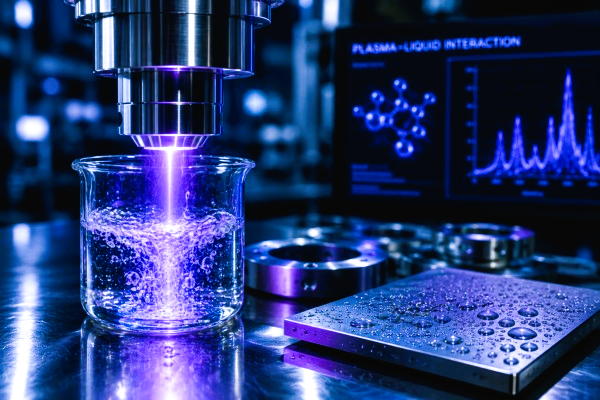
Plasma Activated Fluids are increasingly becoming an important area of interdisciplinary research across plasma physics, fluid engineering, environmental science, and sustainable industrial innovation. As industries and scientific communities search for alternatives to resource-intensive chemical systems, advanced plasma-liquid interaction technologies are gaining attention for their ability to generate chemically reactive environments under carefully controlled engineering conditions. Organizations focused on advanced plasma innovation, such as Luminari Synergy Pvt. Ltd., are exploring how plasma activation systems may contribute toward next-generation sustainability technologies and scalable deep-tech ecosystems.
Modern plasma engineering sits at the convergence of multiple scientific disciplines including plasma chemistry, fluid dynamics, material science, biological systems engineering, and environmental process optimization. The growing interest in these technologies reflects broader global concerns surrounding sustainability, precision agriculture, industrial efficiency, and environmental resilience. Research institutions publishing through Nature and ScienceDirect continue expanding scientific understanding of plasma-liquid interactions and their possible industrial implications.
What Are Plasma Activated Fluids?
Plasma Activated Fluids (PAFs) are liquids exposed to ionized gas environments capable of generating reactive molecular species and altering fluid chemistry. Plasma itself is often referred to as the fourth state of matter because it contains charged particles including electrons, ions, radicals, and excited molecular species. When plasma interacts with liquids, complex physical and chemical interactions occur at the gas-liquid interface, creating dynamic reactive environments that researchers continue investigating for industrial, agricultural, and environmental applications.
The scientific foundation behind plasma activation technologies involves reactive oxygen species (ROS) and reactive nitrogen species (RNS), which are generated during plasma discharge interactions. Common examples include hydroxyl radicals (OH), ozone (O₃), nitric oxide (NO), hydrogen peroxide (H₂O₂), and other reactive intermediates. Current studies suggest these reactive environments may influence biological systems, surface chemistry, and fluid properties under certain conditions. Research published through National Institutes of Health (NIH) and NCBI continues exploring the mechanisms behind these interactions.
Organizations developing advanced plasma engineering systems frequently focus on integrating scientific research with practical applications. Research-driven development frameworks similar to those discussed within the About Section of Luminari Synergy emphasize long-term scientific exploration rather than short-term technological hype.
The Science Behind Plasma Fluid Activation
Plasma activation systems typically operate using non-thermal plasma technologies such as dielectric barrier discharge (DBD), atmospheric plasma jets, or cold plasma reactors. These systems allow energetic electron interactions without generating the extremely high temperatures associated with thermal plasmas. According to plasma engineering studies indexed through IEEE Xplore, non-thermal plasma systems are particularly valuable for applications involving heat-sensitive materials and biological environments.
During plasma-liquid interactions, charged particles collide with fluid molecules and dissolved gases, triggering complex reaction pathways that generate reactive intermediates. The resulting chemistry depends heavily on operating parameters including voltage, pressure, gas composition, exposure duration, electrical frequency, and fluid conductivity. Small parameter changes may significantly alter the resulting reactive species profile, which is why plasma engineering systems require precise process control and repeatability.
Advanced plasma engineering platforms increasingly incorporate modular architectures and controlled activation systems to support research scalability and industrial experimentation. Scientific innovation frameworks similar to those described within the Services Section demonstrate how deep-tech organizations are approaching plasma systems as long-term engineering ecosystems rather than isolated laboratory experiments.
Plasma Activated Fluids in Agriculture
Agriculture represents one of the most actively investigated research areas involving plasma activated systems. Global agricultural systems face increasing pressure from climate variability, resource constraints, water limitations, and concerns surrounding intensive chemical dependence. According to research from the Food and Agriculture Organization (FAO), future agricultural systems will likely require more resource-efficient and environmentally adaptive technologies.
Experimental studies suggest plasma activated water systems may influence seed hydration behavior, microbial interactions, and certain plant-related biological processes under controlled conditions. However, researchers continue investigating the exact mechanisms involved, and results vary according to crop species, plasma parameters, environmental conditions, and treatment methodologies.
Current studies also indicate plasma exposure may alter seed surface wettability and fluid absorption behavior. These investigations remain part of broader efforts exploring sustainable agricultural innovation pathways. The growing scientific interest in these technologies reflects a wider transition toward precision-oriented biological engineering systems and environmentally conscious agricultural research.
Readers interested in following evolving developments across plasma engineering, sustainability systems, and future industrial technologies can also explore research-oriented discussions within the Luminari Synergy Blog, where broader scientific innovation themes continue being examined.
Environmental Applications of Plasma Activated Systems
Environmental engineering increasingly investigates plasma technologies because reactive plasma chemistry can support advanced oxidation processes and targeted chemical interactions. Current research suggests plasma-liquid systems may contribute toward future approaches in water treatment, pollutant degradation, and environmental remediation under controlled conditions.
Research available through the United States Environmental Protection Agency (EPA) discusses advanced oxidation technologies for environmental processing applications. Plasma systems are particularly interesting because they can generate reactive molecular environments without necessarily requiring large quantities of secondary chemical additives.
Environmental plasma engineering remains an evolving research field rather than a universally standardized industrial solution. However, current studies continue exploring possible applications involving wastewater systems, industrial treatment processes, and sustainable processing frameworks.
Plasma Technologies in Industrial Engineering
Industrial plasma technologies already play important roles across several engineering sectors. Semiconductor manufacturing, for example, depends heavily on plasma-based etching and deposition systems capable of nanoscale precision. Materials science research also increasingly utilizes plasma technologies for surface activation, adhesion enhancement, and coating preparation.
Research organizations such as ASM International and the DOE Office of Science continue documenting industrial plasma applications across manufacturing and materials engineering sectors.
Plasma activation systems are also being investigated for sterilization technologies and controlled surface engineering processes. Because plasma interactions can modify surface energy and wettability characteristics, these systems are increasingly relevant for advanced materials engineering environments.
The broader vision behind scalable plasma-enabled systems often involves integrating engineering precision with long-term sustainability frameworks. Companies focused on research commercialization and scalable scientific innovation frequently emphasize interdisciplinary collaboration and future industrial adaptability, themes reflected throughout the Contact Section where research dialogue and future partnerships are encouraged.
Current Challenges in Plasma Activated Fluid Engineering
Despite growing scientific interest, several important engineering challenges remain. Plasma-liquid interactions are highly sensitive to operational conditions, making repeatability and standardization difficult across different system architectures.
Major challenges include:
- process scalability
- energy optimization
- industrial integration
- infrastructure requirements
- long-term validation
- regulatory frameworks
Current research suggests laboratory-scale success does not automatically guarantee industrial deployment feasibility. Many plasma technologies remain in active developmental and validation stages.
Large-scale implementation will likely require continued advances in systems engineering, process control, energy efficiency, and interdisciplinary research collaboration.
Future Research Directions
Future plasma engineering systems may increasingly integrate artificial intelligence, adaptive sensing systems, precision process control, and smart industrial automation frameworks. Machine learning may assist plasma parameter optimization and predictive modeling for complex chemical environments.
Research also continues investigating future applications involving:
- sustainable agriculture
- environmental processing
- precision material engineering
- biological interaction systems
- smart manufacturing ecosystems
The future of plasma activated fluid systems will likely depend on long-term scientific rigor, scalable engineering architectures, and collaboration across physics, chemistry, biology, and industrial engineering disciplines.
Luminari Synergy Pvt. Ltd. approaches plasma engineering through this research-oriented perspective, focusing on scalable scientific exploration and long-term technological ecosystems grounded in real engineering principles rather than speculative innovation narratives.
Conclusion
Plasma Activated Fluids represent a rapidly evolving intersection of plasma physics, fluid engineering, sustainability science, and industrial systems research. While many applications remain under active scientific investigation, current studies continue demonstrating the growing importance of plasma-enabled technologies across agriculture, environmental systems, and advanced industrial engineering.
The transition from experimental research toward scalable implementation will require continued interdisciplinary collaboration, engineering validation, and responsible scientific development. Organizations pursuing long-term research-driven innovation frameworks may play an important role in shaping how plasma technologies evolve within future industrial and sustainability ecosystems.