
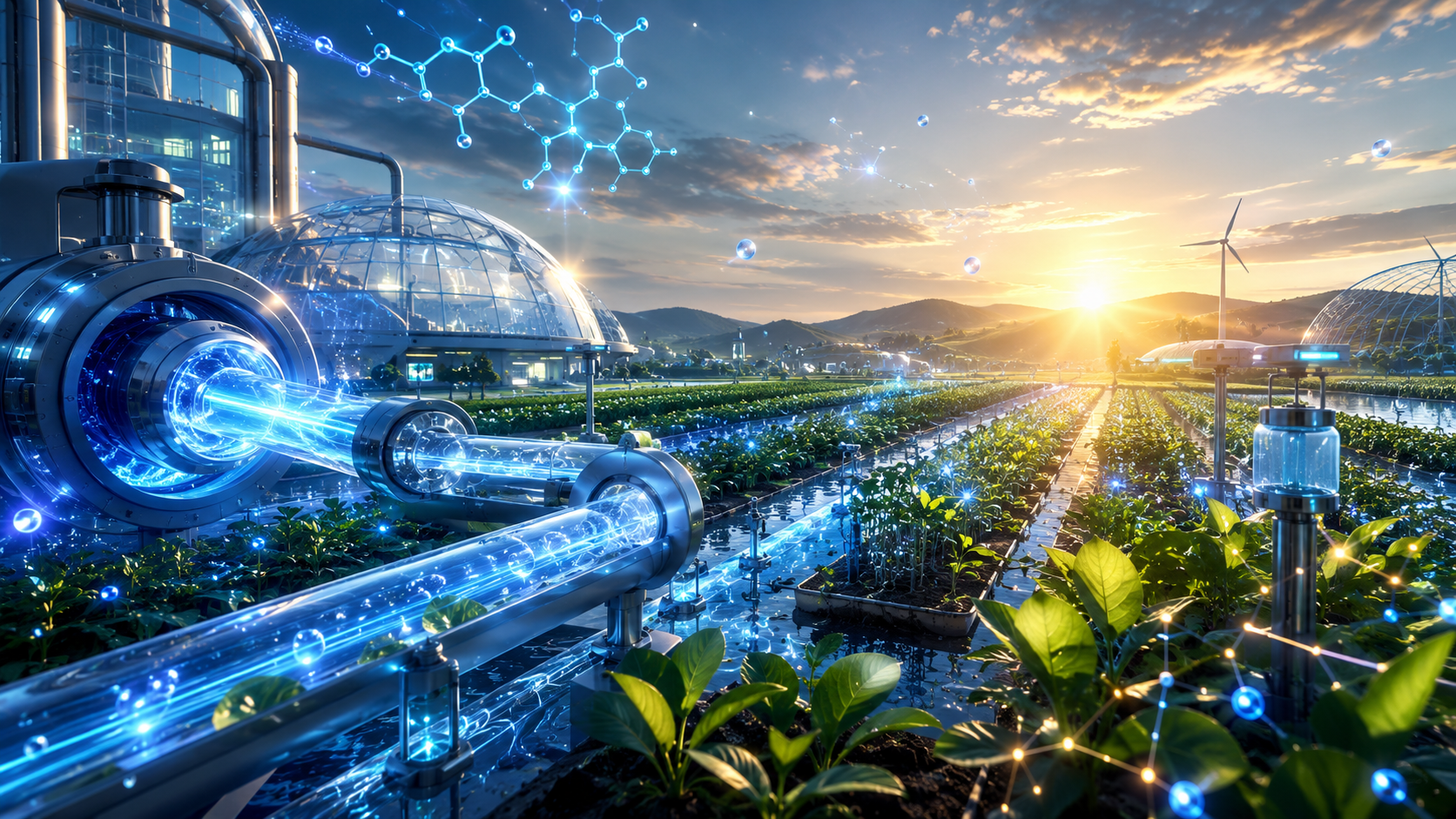
Plasma Activated Water Agriculture is emerging as one of the most fascinating intersections between advanced physics and sustainable farming, opening possibilities that could reshape how future food systems operate. As global agriculture faces increasing pressure from climate change, soil degradation, water scarcity, and chemical dependency, scientific innovation is no longer optional—it is essential.
Researchers worldwide are exploring technologies capable of increasing crop resilience while reducing environmental impact. Among these developments, plasma-enabled systems are gaining serious attention due to their potential biological and ecological advantages.
This article explores the science, applications, future potential, and innovation approach behind plasma technologies and how Luminari Synergy Pvt. Ltd. is advancing next-generation systems at the frontier of deep-tech agriculture.
What is Plasma Activated Water Agriculture
Plasma Activated Water Agriculture refers to agricultural systems that use water exposed to plasma energy processes to alter its chemical composition and biological behavior.
Plasma itself is often described as the fourth state of matter, beyond solids, liquids, and gases.
Unlike traditional water treatment methods, plasma exposure can generate reactive molecular species including:
- Reactive oxygen species (ROS)
- Reactive nitrogen species (RNS)
- Short-lived radicals
- Bioactive compounds
These components may influence biological systems in ways currently attracting significant scientific interest.
Research institutions worldwide continue studying how plasma-treated fluids interact with plants, microorganisms, seeds, and environmental systems.
Research from Nature and ScienceDirect has highlighted increasing academic attention toward plasma-driven agricultural technologies.
Mini Summary
Plasma Activated Water Agriculture combines:
- plasma physics
- chemistry
- biological interactions
- fluid engineering
- agricultural science
into a multidisciplinary technology ecosystem.
Why Plasma Activated Water Agriculture Matters in Future Agriculture
Agriculture faces systemic challenges:
- rising global food demand
- declining soil quality
- increasing fertilizer dependence
- pesticide concerns
- water limitations
- environmental degradation
According to Food and Agriculture Organization (FAO), sustainable intensification is critical for future food security.
Traditional agricultural systems often depend heavily on synthetic chemical interventions. While these solutions helped improve production, they also created ecological challenges.
Emerging technologies are increasingly expected to:
- Improve biological efficiency
- Reduce environmental burden
- Support sustainable productivity
- Lower chemical dependency
- Enhance crop resilience
Plasma-based systems represent a possible pathway toward achieving these objectives.
Key Takeaway
Future agriculture may increasingly rely on technologies that influence biological systems through physical processes rather than purely chemical interventions.
The Science Behind Plasma Innovation
Plasma science may sound futuristic, yet it already exists in numerous industrial and scientific applications.
Examples include:
- semiconductor manufacturing
- medical sterilization
- aerospace technologies
- environmental treatment systems
NASA has long explored plasma science across multiple research initiatives.
How Plasma Interacts with Water
When plasma energy interacts with water, highly reactive molecules may form.
These include:
- hydrogen peroxide
- nitrates
- nitrites
- oxygen radicals
- nitrogen compounds
The resulting fluid environment becomes chemically dynamic.
Researchers continue investigating whether these molecules may:
- influence seed germination
- affect microbial ecosystems
- support plant signaling pathways
- improve nutrient interactions
The biological response mechanisms remain an active area of global study.
Biological Interaction Pathways
Several proposed mechanisms include:
Seed Surface Modification
Plasma interactions may alter seed coat properties.
Potential effects:
- improved water absorption
- altered surface energy
- accelerated germination behavior
Microbial Ecosystem Effects
Plasma-generated compounds may influence microbial populations surrounding root systems.
Cellular Signaling
Reactive species may affect biological signaling pathways involved in plant stress responses.
Studies indexed through National Institutes of Health (NIH) continue exploring these pathways.
How Luminari Synergy Uses Plasma Activated Water Agriculture
Luminari Synergy Pvt. Ltd. operates at the intersection of applied plasma science and scalable real-world systems engineering.
The company’s mission extends beyond laboratory experimentation.
Its approach seeks to bridge:
- plasma physics
- plasma chemistry
- fluid activation
- biological systems
- engineering research
into practical technology ecosystems.
Core Innovation Areas
Plasma-Based Agriculture Technologies
Research-driven systems designed to investigate biological enhancement opportunities.
Fluid Activation Technologies
Advanced activation methodologies for future agricultural and environmental applications.
Sustainable Biological Systems
Solutions designed around reduced ecological burden and enhanced resource efficiency.
Deep-Tech Engineering Platforms
Building scalable systems intended for real-world deployment.
Rather than creating isolated products, Luminari Synergy develops interconnected innovation frameworks.
Plasma Activated Water and Future Systems
Plasma Activated Water Agriculture may evolve beyond agriculture alone.
Future systems could integrate:
Smart Agriculture Platforms
Potential integration with:
- IoT sensors
- predictive analytics
- precision farming
- automated treatment systems
Biological Intelligence Systems
Adaptive technologies capable of responding to environmental conditions dynamically.
Controlled Environment Farming
Future applications may include:
- greenhouse ecosystems
- vertical farming
- hydroponics
- urban agriculture
Research from United States Department of Agriculture (USDA) continues exploring technological pathways toward sustainable farming systems.
Industrial and Environmental Applications
Plasma technologies are not limited to agriculture.
Potential applications extend into multiple sectors.
Water Treatment Systems
Reactive plasma systems may support:
- pollutant reduction
- water quality improvement
- environmental remediation
Food Technology
Researchers continue investigating applications involving:
- microbial control
- shelf-life enhancement
- food safety systems
Surface Engineering
Industrial systems increasingly use plasma processes for:
- material modification
- coating enhancement
- surface treatment
Environmental Sustainability
Potential environmental advantages include:
- lower chemical use
- resource optimization
- reduced ecological impact
Research through Massachusetts Institute of Technology (MIT) increasingly highlights interdisciplinary sustainability technologies.
Challenges and Future Research
Despite promising developments, several important scientific questions remain.
Current limitations include:
Standardization Challenges
Plasma-generated conditions can vary depending on:
- power levels
- gas composition
- exposure time
- environmental factors
Long-Term Biological Validation
Many studies remain early-stage.
Large-scale field research is still needed.
Scalability Questions
Laboratory success does not automatically guarantee industrial feasibility.
Commercial deployment requires:
- engineering optimization
- cost efficiency
- repeatability
- regulatory understanding
Research Gaps
Key future questions include:
- long-term soil interactions
- crop-specific responses
- biological variability
- ecosystem impacts
These areas represent major opportunities for future innovation companies.
Future Outlook
Plasma Activated Water Agriculture sits at the convergence of multiple technological revolutions:
- advanced physics
- sustainable engineering
- agricultural technology
- biological sciences
- environmental innovation
As scientific understanding advances, plasma systems may evolve into an important category within next-generation agricultural infrastructure.
Deep-tech organizations capable of combining multidisciplinary expertise with scalable engineering may define future industry leadership.
Luminari Synergy aims to contribute to this transformation by connecting breakthrough scientific principles with practical applications capable of addressing real-world challenges.
Future Snapshot
Over the next decade, future agriculture may increasingly shift toward:
✔ Reduced chemical dependency
✔ Intelligent fluid systems
✔ Bio-responsive technologies
✔ Sustainable productivity models
✔ Physics-driven agricultural innovation
Plasma Activated Water Agriculture could become one of the most important technological discussions shaping future farming ecosystems.