
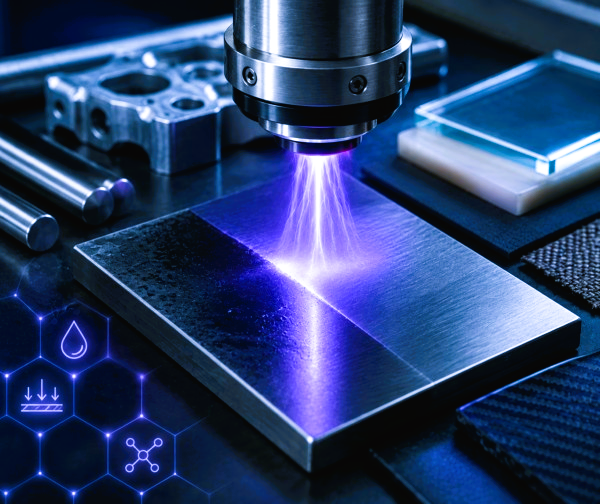
Surface Engineering is rapidly evolving into one of the most important scientific and industrial disciplines shaping advanced manufacturing, material performance optimization, and precision processing systems. As industries increasingly demand cleaner, more precise, and highly controllable processing methods, industrial plasma treatment technologies are gaining global attention for their ability to modify material surfaces at microscopic and molecular scales without relying entirely on aggressive chemical processing pathways.
Modern industries no longer compete only on production volume. Increasingly, they compete on material precision, process efficiency, durability, sustainability, and long-term engineering performance. Plasma-enabled surface engineering systems represent an important transition toward highly controlled next-generation manufacturing ecosystems. Organizations focused on advanced plasma innovation, including Luminari Synergy Pvt. Ltd., are investigating how plasma-based material activation systems may contribute toward future industrial processing architectures, sustainable engineering systems, and scalable deep-tech manufacturing technologies.
Research published through Nature Materials and ScienceDirect increasingly highlights the growing industrial relevance of plasma-enabled surface treatment technologies across sectors including semiconductor manufacturing, aerospace engineering, biomedical materials, energy systems, and advanced industrial processing.
What Is Surface Engineering?
Surface engineering is the scientific and industrial process of modifying the outer characteristics of materials to improve performance, functionality, durability, or interaction behavior without fundamentally altering the core structure of the material itself. In many engineering systems, surface behavior determines how materials interact with fluids, coatings, biological systems, heat, friction, electrical environments, and chemical processes.
Modern surface engineering integrates concepts from:
- plasma physics
- material science
- surface chemistry
- nanotechnology
- precision manufacturing
- industrial engineering
Material surfaces operate as highly dynamic interfaces where microscopic changes can significantly influence overall engineering performance. Because of this, advanced industries increasingly focus on precision surface modification technologies capable of controlling interactions at micro and nanoscale levels.
Research-oriented industrial development ecosystems similar to those discussed within the About Section of Luminari Synergy increasingly emphasize long-term scientific engineering frameworks designed around scalable innovation rather than isolated experimental technologies.
The Science Behind Industrial Plasma Treatment Technologies
Industrial plasma treatment systems utilize ionized gases containing charged particles, reactive radicals, excited molecular species, and electromagnetic interactions capable of influencing material surfaces under controlled conditions. Plasma is often described as the fourth state of matter because its energetic behavior differs fundamentally from solids, liquids, and neutral gases.
When plasma interacts with material surfaces, several processes may occur simultaneously, including:
- surface activation
- molecular bond modification
- oxidation reactions
- cleaning effects
- wettability alteration
- energy transfer interactions
Plasma systems frequently generate Reactive Oxygen Species (ROS) and Reactive Nitrogen Species (RNS), including hydroxyl radicals, atomic oxygen, ozone, nitric oxide, and other reactive intermediates. These molecular species can significantly influence surface chemistry depending on operational conditions.
Research from IEEE Xplore and ASM International continues documenting how plasma-enabled processing systems are becoming increasingly important for precision industrial applications requiring highly controlled surface modification environments.
Precision Material Activation Through Plasma Engineering
Material activation refers to altering surface properties to improve interaction characteristics such as adhesion, wettability, bonding capability, coating compatibility, or biological response behavior. Plasma technologies are particularly valuable because they allow highly targeted modifications without necessarily affecting the bulk properties of the underlying material.
Current studies suggest plasma activation systems may influence:
- surface energy
- hydrophilicity
- coating adhesion
- contamination removal
- microstructural surface interactions
In industrial manufacturing environments, even small improvements in material interaction behavior can significantly affect process quality, product reliability, and long-term engineering performance.
This increasing demand for controlled material activation technologies is one reason advanced plasma engineering systems are attracting growing industrial interest. Scientific development pathways similar to those explored within the Services Section demonstrate how plasma engineering is evolving from isolated laboratory experimentation toward broader industrial systems integration.
Plasma Technologies in Advanced Manufacturing Systems
Industrial plasma processing already plays a major role across several high-precision manufacturing sectors.
Semiconductor Manufacturing
Modern semiconductor fabrication depends extensively on plasma-based etching and deposition systems capable of nanoscale precision control. Without plasma processing technologies, many advanced microelectronic systems would not be feasible.
Aerospace Engineering
Surface engineering systems are increasingly used for:
- thermal resistance optimization
- coating preparation
- corrosion resistance enhancement
- material performance optimization
Biomedical Engineering
Cold plasma systems continue receiving scientific attention for:
- sterilization research
- biomaterial surface modification
- controlled microbial interactions
Precision Manufacturing
Plasma technologies may support:
- contamination control
- coating preparation
- adhesive performance
- microfabrication processes
Research from DOE Office of Science and NASA Materials Engineering Research continues exploring advanced materials processing technologies for future engineering systems.
Sustainable Industrial Processing and Environmental Implications
Modern manufacturing increasingly faces pressure to improve sustainability while maintaining precision and scalability. Traditional processing methods often rely heavily on chemical-intensive systems, solvent usage, or high-energy thermal processing environments.
Current research suggests plasma-based processing systems may support more targeted engineering approaches under specific conditions. Because plasma technologies can operate through localized energy interactions and controlled reactive environments, researchers continue exploring their potential role in cleaner industrial processing pathways.
Potential sustainability-oriented research areas include:
- reduced chemical dependency
- precision treatment systems
- lower process waste
- advanced surface cleaning
- process efficiency optimization
However, industrial implementation remains highly dependent on engineering scalability, economic feasibility, operational repeatability, and infrastructure compatibility.
Readers following future developments in plasma-enabled sustainability systems, advanced manufacturing, and deep-tech engineering research can also explore ongoing scientific discussions within the Luminari Synergy Blog where emerging industrial innovation pathways continue being examined.
Engineering Challenges in Scalable Plasma Processing
Despite major advances in plasma engineering research, several technical challenges remain before broader industrial scalability can be fully achieved.
Process Repeatability
Plasma systems are highly sensitive to operational parameters including:
- gas composition
- voltage
- pressure
- exposure duration
- environmental conditions
Maintaining repeatable industrial performance remains a major engineering challenge.
Infrastructure Requirements
Large-scale plasma processing systems often require specialized infrastructure and precise control architectures.
Energy Optimization
Improving energy efficiency remains an important research priority across plasma-enabled manufacturing systems.
Industrial Integration
Future deployment depends heavily on compatibility with existing manufacturing ecosystems and production workflows.
Current studies continue investigating these engineering barriers while exploring practical scalability pathways.
Future of Surface Engineering and Plasma-Based Manufacturing
The future of industrial engineering increasingly points toward intelligent, adaptive, and highly precise manufacturing systems integrating multiple scientific disciplines.
Emerging research directions include:
- AI-assisted plasma process optimization
- smart manufacturing ecosystems
- adaptive materials engineering
- precision surface chemistry control
- sustainable industrial processing frameworks
Machine learning systems may eventually assist real-time plasma parameter optimization, predictive material interaction modeling, and automated process refinement.
The organizations likely to shape future plasma-enabled manufacturing systems will not simply be technology developers. They will be long-term research ecosystems capable of integrating plasma science, industrial engineering, sustainability thinking, and scalable systems architecture into practical real-world platforms.
This is precisely why research-driven organizations focused on deep scientific infrastructure rather than short-term trend cycles are attracting increasing strategic relevance across future industrial technology sectors.
Conclusion
Surface engineering and industrial plasma treatment technologies represent a major scientific transition toward precision-controlled material processing environments capable of supporting future manufacturing ecosystems. While many plasma-enabled systems remain under active development and optimization, current research increasingly demonstrates their importance across semiconductor manufacturing, biomedical engineering, sustainability systems, aerospace technologies, and advanced industrial processing.
The future of scalable plasma engineering will depend on scientific rigor, interdisciplinary collaboration, industrial systems integration, and long-term research maturity. Organizations capable of combining these elements into coherent innovation ecosystems may play a defining role in shaping next-generation engineering infrastructure.
Luminari Synergy Pvt. Ltd. continues exploring this future through research-driven plasma engineering systems designed around scientific credibility, industrial scalability, and long-term technological impact. Researchers, institutions, industrial collaborators, and future-focused engineering partners interested in advanced plasma-enabled systems are encouraged to initiate conversations, explore collaborative opportunities, and engage with the evolving future of precision engineering technologies through the Contact Section.